

Last Updated on July 24, 2026 by Christian Adams
Some genres of rock music live in the shadows, tucked between the household names and the recycled yacht rock playlists. That’s where the rock genres beginning with J reside. From the anti-climactic improvisations of jazz fusion to the whimsical mysticism of jangle pop, each has carved out its own stubborn little niche.
Many of these genre tags wound up in the record store cut-out bins, but rock has always thrived on the fringes, where subgenres sprout and mutate. And in this case, the letter J offers a surprisingly rich landscape. That’s where Rock Genres Explained steps into the picture.So, grab your headphones, and let’s drop the needle on the jazzy, jangly, and joyously weird.
Rock Genres Beginning With J
Jangle pop
| Origin: | Mid-to-late 1960s folk rock meets late 1970s new wave |
| Peak popularity | 1979–1989 |
| Defining artists: | R.E.M., Let’s Active, Pylon, The Smiths, Teenage Fanclub, Gin Blossoms, The Chills, Straitjacket Fits, Robyn Hitchcock |
| Exemplary album: | R.E.M., Murmur (1983) |
No artist in the history of time has ever identified as jangle pop. I would imagine that every artist listed in the “defining artists” category would bristle at the mention.
The “jangle” aspect of the genre refers to the chiming Rickenbacker 12-string guitar of “Turn! Turn! Turn!” and “Mr. Tambourine Man“ by The Byrds (1965), and the term is yet another journalistic contrivance. The Byrds electrified a gentle folk song with uptempo rock signatures minus the machismo and distortion. Guitars shimmer with clean arpeggios instead of crunchy power chords. Closely related to power pop, artists like Big Star and Todd Rundgren occasionally dabbled in the sound.
In the early to mid-1980s, R.E.M. and The Smiths represented an era of underground guitar music that was literate and melodic, with just a touch of punk’s ragged edge. And again, with the Rickenbacker guitars. Mysterious yet approachable, R.E.M.’s Murmur (1983) is a cornerstone of the sound. By the ’90s, the term was a clichéd shorthand for the introspective, guitar-driven music of Teenage Fanclub, Gin Blossoms, or even Britpop’s Oasis.
Jazz fusion
| Origin: | 1960s jazz and experimental rock |
| Peak popularity | 1969–1975 |
| Defining artists: | Miles Davis, Weather Report, Mahavishnu Orchestra, Herbie Hancock |
| Exemplary album: | Miles Davis, Bitches Brew (1970) |
Rock musicians have borrowed from jazz since the mid-to-late 1960s: think of the Grateful Dead’s extended jams, Frank Zappa’s avant-garde conceptualism, or Steely Dan’s sophisticated chord progressions. Even punk has traces of jazz in attitude or alienation from the mainstream. But what happened when jazz musicians started borrowing from rock music?
Briefly, jazz fusion is the marriage of jazz harmony and improvisation with elements of rock, funk, and R&B played on rock instruments, while jazz rock is rock music with a brass section. Jazz rock is more radio-friendly, often delivering memorable hooks without sacrificing musicianship. “Roll Over Beethoven” with saxophones, more or less.
Bitches Brew vs. In A Silent Way
When Miles Davis released Bitches Brew in 1970, they say he kicked down the walls between jazz and rock. However, I think jazz fusion began on his previous record, In A Silent Way (1969). Instead of acoustic horns and brushed drums, Davis plugged into electric keyboards and amplified guitars. The result was a sprawling, psychedelic mix of improvisational free jazz with rock’s volume, power, and groove. It also emphasized the polarizing difference between jazz fusion and jazz rock.
A New Harmonic Language for “Special Players”
Some critics say jazz fusion is speaking a new harmonic language with little regard for the listener. Though fusion may sometimes sound like amateur noise, it’s an elitist proposition with arrangements that vary in complexity. It’s the kind of music of which you must “learn all the rules so you can break them,” and as a result, only the top-tier instrumentalists bother with it.
Only special players can improvise over groove-based vamps fixed to a single key or a single chord with a simple, repeated melody—for 15 minutes—and, more importantly, have the chops to follow elaborate chord progressions, unconventional time signatures, or melodies with countermelodies, not unlike progressive rock. The resulting music is not for amateurs. You gotta work for it.
Mahavishnu Orchestra stretched fusion into virtuosic shred, Weather Report made it atmospheric and funky, and Herbie Hancock made it danceable with Head Hunters (1973). Though fusion fell out of favor by the ’80s, its fingerprints are found in rock genres from yacht rock to jam bands to metal.
Jazz rock
| Origin: | Late 1960s jazz and rock |
| Peak popularity | 1969–1977 |
| Defining artists: | Blood, Sweat & Tears, Chicago, Frank Zappa, Steely Dan, Soft Machine, Santana |
| Exemplary albums: | Chicago, Chicago Transit Authority (1969) and Steely Dan, Aja (1977) |
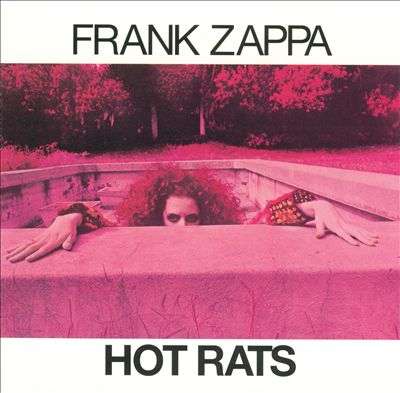
Commercial jazz rock fused horns with guitars, and jazz melodies with rock structures. In the late 1960s, bands like Blood, Sweat & Tears and Chicago put brass sections at the center of rock songs, creating arrangements that could swing and punch at the same time. Frank Zappa pushed it into experimental territory with Hot Rats (1969), and Steely Dan brought smooth sophistication and memorable hooks. The style grew alongside jazz fusion but leaned more radio-friendly. Chicago Transit Authority (1969) is a landmark, as are Steely Dan’s mid-’70s records, which redefined studio polish.
Today, jazz rock’s spirit lingers in jam bands, prog, math rock, and alternative rock acts who want complexity without losing melody, rhythm or swing.
10 Essential Jazz Rock Albums
- Blood, Sweat & Tears – Blood, Sweat & Tears (1968)
- Chicago – Chicago Transit Authority (1969)
- Miles Davis – Bitches Brew (1970)
- Mahavishnu Orchestra – The Inner Mounting Flame (1971)
- Frank Zappa – Hot Rats (1969)
- Steely Dan – Aja (1977)
- Soft Machine – Third (1970)
- Return to Forever – Romantic Warrior (1976)
- Colosseum – Valentyne Suite (1969)
- Jeff Beck – Blow by Blow (1975)
Jazz punk
| Origin: | Late 1970s–1980s New York and London art rock scenes |
| Peak popularity | 1979–1989 |
| Defining artists: | James Chance and the Contortions, Lounge Lizards, Blurt, Rip Rig + Panic |
| Exemplary album: | Buy (1979) by James Chance and the Contortions |
Associated with free jazz and no wave, jazz punk is chaos colliding with saxophones and syncopation. Emerging in the late ’70s New York no wave scene, players like James Chance brought free jazz skronk to punk clubs, resulting in abrasive, danceable, confrontational music. The Lounge Lizards, often tongue-in-cheek called a “fake jazz” band, expanded it with angular improvisation. In the U.K., Blurt and Rip Rig + Panic fused punk’s irreverence with brass and groove.
Jazz punk never gained mainstream traction, but it’s had an enduring influence on post-punk, noise rock, and experimental scenes.
Jazz folk (aka folk jazz)
| Origin: | Late 1960s–1970s folk rock and jazz |
| Peak popularity | 1968–1978 |
| Defining artists: | Tim Buckley, Joni Mitchell (later period) |
| Exemplary album: | Joni Mitchell, The Hissing of Summer Lawns (1975) |
One might argue that Astral Weeks (1968) by Van Morrison is the precursor to the jazz folk genre, but we’re really only interested in two artists: Tim Buckley and Joni Mitchell.
One might argue that Astral Weeks (1968) by Van Morrison is the precursor to the jazz folk genre (aka folk jazz), but we’re really only interested in two artists: Tim Buckley and Joni Mitchell.
Buckley crossed the intimacy of folk with jazzy sophistication, taking a singer-songwriter’s approach to improvisation, unusual phrasing, and non-traditional structures. Mitchell, especially in her mid-’70s work, surrounded herself with jazz players like Jaco Pastorius, introducing open tunings and poetic lyrics into dialogue with jazz harmony, blurring the lines between simplicity and virtuosity.
I used to buy records at Amoeba on Haight Street in San Francisco, where I spent more than a few hours in a squat position, digging through the vinyl cut-out bins on the floor. One afternoon in the mid-2000s, I found three Tim Buckley albums in the bins [Happy Sad (1969), Starsailor (1970), and Greetings From L.A. (1975)], and I thought, “I’ve never heard any of these.” The vinyl was in crap condition, but for $2.99 a pop, let’s do it.
The clerk at the counter eyeballed me suspiciously while inspecting the Buckley records. We weren’t on a first-name basis but we often made small talk and she was familiar with me and my buying habits. “You know this isn’t Jeff Buckley, don’t you?” she said.
“Yeah. I’m curious. I’ve never heard the old man.”
The clerk scoffed as she slid Happy Sad into its sleeve. “You’re not gonna like him.”
“Only one way to find out.”
A week later, I went back to Amoeba, found the clerk, and said, “You were right.”
Jazzcore
| Origin: | Late 1980s–1990s, experimental punk and jazz |
| Peak popularity | 1989–1995 |
| Defining artists: | Naked City, Painkiller, John Zorn |
| Exemplary album: | Naked City (1989) by Naked City |
Hardcore punk’s intensity collides with free jazz’s dissonance. John Zorn’s Naked City epitomized it: one-second blast beats, skronking saxophones, abrupt stylistic shifts. It was chaos as a composition. Painkiller and other Zorn projects expanded the language, fusing grindcore, metal, and jazz improvisation. The result was extreme, abrasive, and sometimes hilarious.
Jazzcore isn’t for everyone, but it proved how elastic the term “rock” could be when infused with other avant-garde traditions. It still influences mathcore, experimental metal, and noise rock today.
Jersey Shore Sound
| Origin: | 1960s East Coast rock and R&B |
| Peak popularity | 1975–1985 |
| Defining artists: | The Rascals, Southside Johnny and the Asbury Jukes, Bruce Springsteen, Little Steven |
| Exemplary album: | Bruce Springsteen, Born to Run (1975) |
The Jersey Shore Sound refers strictly to musicians from the Jersey Shore region who gained popularity in the mid-1960s and beyond. However, we’re mainly talking about two or three bands: The Rascals (“Good Lovin’), who’re really more of a New York band, Bruce Springsteen (and the E Street Band), and Southside Johnny and the Asbury Jukes. All three made unpretentious rock n’ roll with R&B grooves and soulful melodies, but honestly, we’re really talking about Springsteen here.
The genre went worldwide with Born to Run (1975), an album that brought the boardwalk’s rock and soul energy into widescreen rock anthems. While Springsteen embraced heartland rock, his roots in the Jersey Shore sound left us with honking saxophones, the party-starting keyboards, and the blue-collar communal feel of songs like “Thunder Road” and “Rosalita”.
We welcome your comments!