
Last Updated on July 30, 2026 by Christian Adams
There’s a persistent rumor in rock history, whispered between vinyl crates and barstools:
“You know they sold out Shea Stadium faster than the Beatles, right?”
It’s the kind of trivia nugget that sounds like urban legend, except it’s not. It’s a testament to a band that critics mocked, the industry shrugged at, and fans turned into folk heroes. Not to mention, Homer Simpson’s favorite band.
Welcome to the bizarre, blue-collar mythology of Grand Funk Railroad.
Where It All Began: Detroit Rock City
This wasn’t a band built in a boardroom or an answer to the British Invasion. It was a three-man sonic haymaker out of Flint, Michigan, born of factory dust, garage sweat, and the kind of American defiance that doesn’t beg for approval. While other bands aimed for elegance or enlightenment, GFR just wanted to be louder than your dad’s Buick and twice as hard to ignore.
Mark Farner (guitar, vocals), Don Brewer (drums, vocals), and Mel Schacher (bass, vocals) didn’t play hard rock music. They muscled it into the world with basslines like steel girders, drums that cracked like union picket signs, and vocals that split the sky.
And the result?
A band so beloved by the people and so hated by the press that they practically invented the blueprint for cult rock success: outsell the legends, piss off the critics, and ride the rails anyway.
This isn’t a eulogy or a greatest-hits checklist. The band is still touring in 2026! It’s a deep dive into the snarling, stadium-shaking beast that is Grand Funk Railroad—its members, its music, its myths, and the very real legacy it left in its sweaty, shirtless wake.
The Untamed Rise of Grand Funk Railroad
Grand Funk Railroad formed in Flint, Michigan, a town not designed for rock bands, but for torque wrenches and overtime shifts.
Mark Farner had already tasted failure with a smile on it. He’d been the bass player in Terry Knight & the Pack, a local outfit with regional hits and national ambitions. When that project collapsed, Farner pivoted. He dropped the bass, picked up a guitar.
Don Brewer, the drummer with the Pack, drove the rhythm like a stolen car. His playing was all lean muscle and locked jaw.
But it wasn’t complete until they brought in Mel Schacher, a teenage bass demon fresh off a stint with ? and the Mysterians. Schacher played with finesse and a deep-end rumble.
And then (maybe predictably, maybe fatefully) they looped back in a ghost from their past: Terry Knight.
Knight Behind the Scenes
Knight, now out of the spotlight and keen to get behind the scenes, signed on as their manager. He knew the industry, knew how to sell a myth, and more importantly, knew how to amplify a spectacle.
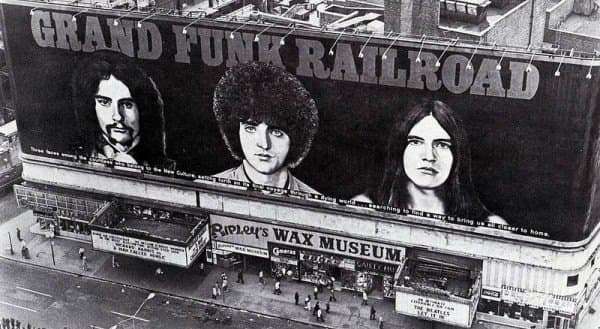
He locked them in a deal, plastered their name in thick black letters across every billboard and poster he could afford, and helped book their breakout gig: the 1969 Atlanta Pop Festival.
They weren’t even supposed to be there. They played anyway. By the time they left, Grand Funk Railroad wasn’t an opening act…it was a phenomenon. The crowd had never heard a three-piece sound so colossal.
It wasn’t elegant. It was density. Volume as protest. Riffs as rebellion.
The critics were appalled. The public was obsessed.
Their moniker—Grand Funk Railroad—was a warped riff on the Grand Trunk Western line that cut through Flint. Part joke, part threat. It sounded like infrastructure, and that’s what they were: a sonic delivery system with no brakes.
What followed next (the gold records, the lawsuits, the stadiums) is its own opera. But it started here: three industrial sons, one volatile manager, and a sound that didn’t ask to be heard.
It demanded it.
Grand Funk Railroad’s Wild Ride
Grand Funk Railroad’s albums capture an unfiltered energy that evolved alongside the chaos of the early 70s. Their records can be loud, uneven, sometimes messy, but always honest.
On Time (1969)
The debut album is rough around the edges but full of spirit. The songs are straightforward, almost urgent. “Time Machine” and “Are You Ready” show early signs of their high-octane style, with a bluesy backbone that feels as gritty as the city they came from.
Grand Funk (1969)
Their follow-up pushed their sound heavier and louder. Tracks like “Into the Sun” are relentless attention-grabbers. This album bridged their garage band roots and the more polished rock they were quickly moving toward.
Closer to Home (1970)
This album was where Grand Funk Railroad really broke through. The title track is a 9-minute anthem that feels like a rallying cry for anyone who’s ever worked hard and felt overlooked. The record went platinum, proving the band could fill arenas while still sounding authentic and unfiltered.
Survival (1971)
Survival continued the band’s hard-driving sound but showed a band still experimenting with how to balance melody and muscle. While it didn’t reach the heights of the previous album, songs like “I Can’t Get Along with Society” demonstrated their willingness to mix social commentary with their signature bombast.
E Pluribus Funk (1971)
Here, the band tried expanding their sound. “I Come Tumblin’” stands out as a sprawling, almost psychedelic piece that showed they could go beyond straightforward rock. But this album also exposed some of the tension within the band between long jams and concise, radio-friendly songs—a push and pull that would follow them for years.
Phoenix (1972)
After splitting with Terry Knight, Phoenix was tighter and more polished, but they didn’t lose the band’s core energy. The title track feels like a fresh start, a band trying to find new footing without losing what made them Grand Funk in the first place.
We’re an American Band (1973)
Produced by Todd Rundgren, this album was a calculated success. The title track became their signature anthem–tight, catchy, and impossible not to sing along with. Songs like “Walk Like a Man” and “Stop Lookin’ Back” showed their ability to write hook-heavy tunes without diluting their raw power. This record cemented their place in rock history.
Shinin’ On (1974)
This album continued the commercial momentum, with a slicker sound and radio-ready hits like the title track and “The Loco-Motion” (Goffin/King cover). It was clear the band was embracing a more mainstream audience while still holding onto enough grit to keep longtime fans interested.
“Shinin’ On” appears in the soundtrack of The Simpsons episode “Homerpalooza” (Season 7, Episode 24).
All the Girls in the World Beware!!! (1974)
By this point, cracks were showing. The album leaned heavily on arena rock formulas, and while it contained a few solid tracks, many fans and critics felt Grand Funk had lost some of the rawness that made them unique.
Born to Die (1976)
This album saw the band trying to adapt to changing musical trends but struggling to find a consistent identity. It felt like a band caught between past glories and an uncertain future, with songs that lacked the spark of earlier work.
Good Singin’, Good Playin’ (1976)
Produced by Frank Zappa, this album was an attempt to recapture the band’s original energy. While it had moments of brilliance (“Pass It Around“), it failed to make a significant impact, and Grand Funk Railroad disbanded shortly afterward. Zappa also plays guitar on “Out to Get You”.
Grand Funk Lives (1981)
After several years apart, the band reunited for this album. It featured a more polished rock sound that hinted at maturity but struggled to break through a music scene dominated by new wave and emerging genres.
Grand Funk Essentials: From Stadium Shouts to Sonic Secrets
“We’re an American Band” (1973)
Album: We’re an American Band
Produced by Todd Rundgren and wrapped in a golden vinyl jacket, this was the band’s declaration of independence from the critics, the doubters, and even from their earlier selves. It’s the sound of a group that finally knew who they were and decided they didn’t care who didn’t get it.
“Flight of the Phoenix” (1972)
Album: Phoenix
Grand Funk Railroad added former Fabulous Pack bandmate Craig Frost on keyboards in 1972, just in time to record Phoenix. The addition of keyboards introduced stylistic shift from Grand Funk’s original choogle-based roots to a variable R&B, progressive rock and pop rock-oriented style.
This track proved that Grand Funk could be expansive without losing their soul. It remains one of the most musically mature pieces in their catalog.
“I Come Tumblin’” (1971)
Album: E Pluribus Funk
If Grand Funk ever had a hidden gem that captured their proto-punk edge with an undercurrent of menace, this is it.
“Into the Sun” (1969)
Album: On Time
At nearly 7 minutes long, this track from their debut album is an early example of how Grand Funk Railroad songs didn’t always need lyrics to say something big. “Into the Sun” is a slow-burning freak-out with a thick, distorted underbelly. There’s a psychedelic sludginess to it—like Sabbath on a Midwest road trip.
Grand Funk Railroad Members: Flint’s Loudest Sons
Grand Funk Railroad were forged in the industrial heart of Flint, Michigan—a trio of musicians who channeled the grit and determination of their hometown into a sound that was unapologetically raw and powerful.
Mark Farner: The Passionate Frontman
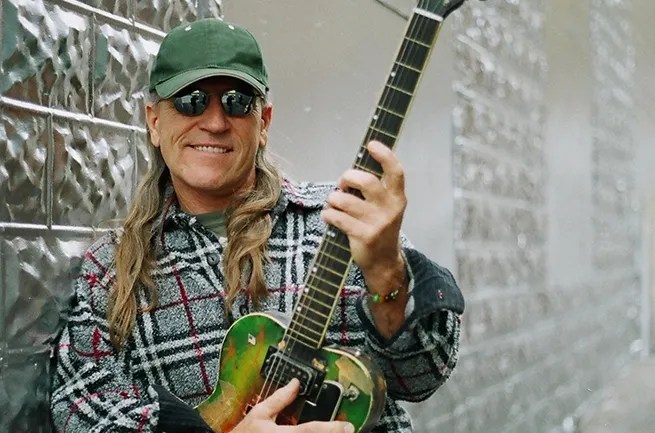
Mark Farner wasn’t your typical rock star. With his barefoot performances and unfiltered energy, he brought a sincerity to the stage that resonated deeply with audiences. Farner’s songwriting, often infused with themes of love, unity, and social consciousness, set Grand Funk apart from many of their contemporaries. His commitment to authenticity was unwavering, even as the band’s fame grew. After the band’s initial run, Farner embarked on a solo career, exploring contemporary Christian rock and continuing to perform with his own group, Mark Farner’s American Band.
Fun Fact: Mark Farner didn’t just sound like a preacher when he wailed on stage—he actually became one. After leaving Grand Funk, Farner’s path took a spiritual turn, and he was officially ordained as a Christian minister. Turns out, all that righteous energy and soul-stirring delivery had more than a little gospel in it from the start. The barefoot rock star who once sang to arenas now occasionally speaks from the pulpit, just with less distortion.
Don Brewer: The Rhythmic Backbone

Don Brewer’s drumming was the heartbeat of Grand Funk Railroad. His dynamic rhythms and backing vocals provided a solid foundation for the band’s sound. Brewer wasn’t just keeping time; he was driving the music forward with precision and flair. His contributions extended beyond the drum kit–he co-wrote and sang lead on the band’s first number one hit, “We’re an American Band,” showcasing his versatility and creative input.
Mel Schacher: The Bass Virtuoso

Mel Schacher’s bass lines added depth and power to Grand Funk’s music. Before joining the band, Schacher played with ? and the Mysterians, gaining valuable experience that he brought to the trio. His robust bass playing complemented Farner’s guitar work and Brewer’s drumming, creating a cohesive and formidable sound. Schacher’s stage presence and musical prowess earned him the nickname “The God of Thunder” among fans.
Terry Knight: The Controversial Manager

Terry Knight played a pivotal role in Grand Funk Railroad’s early success. As their manager and producer, he was instrumental in shaping the band’s image and securing their initial record deals. Knight’s aggressive promotion helped catapult the band to fame, but his controlling nature eventually led to tensions and legal disputes. The band’s relationship with Knight was complex; he was both a catalyst for their rise and a source of significant conflict.
The Live Experience: Sweat, Noise, and Pure Grit
Forget fancy lights or big production tricks. Grand Funk Railroad’s live shows were about one thing–raw, unfiltered power.
Critics often wrote them off as loud and sloppy, but fans couldn’t get enough. The shows were loud, sweaty, sometimes chaotic, but they were honest. No filler, no fluff. Just three guys going all-in night after night, pushing themselves and the crowd to the edge.

Three Legendary Shows
1. The Atlanta International Pop Festival, 1970
At their second Atlanta International Pop Festival, Grand Funk took the stage amidst a sea of festival-goers still warming up to their sound, but they wasted no time tearing into their set. Highlights included the raw energy of “Are You Ready,” the anthemic “Timothy,” and the relentless drive of “Heartbreaker.” Their performance won over skeptics and solidified their reputation as a band that could own any stage, anywhere.
2. The Cobo Arena, Detroit, 1970
Back home in Detroit, Grand Funk delivered a powerhouse performance packed with crowd favorites. The setlist boasted blistering versions of “Closer to Home (I’m Your Captain),” the gritty “Mean Mistreater,” and “Gimme Shelter,” a cover that showcased their ability to reinterpret and electrify.
3. Shea Stadium, New York, 1971
Their legendary Shea Stadium show remains one of rock’s most iconic moments. In front of 55,000 fans, GFR crushed through an epic set that included “Inside-Looking Out,” “Footstompin’ Music,” and the stadium-shaking anthem “We’re An American Band”.
Signed, Screwed, and Sued: The Terry Knight Fallout
Every rock story needs its villain, and for Grand Funk Railroad, that role was filled by none other than Terry Knight: their original manager, promoter, and, at one point, their golden ticket to stardom. But behind the scenes, what started as a promising partnership quickly spiraled into a legal and financial nightmare.
Knight discovered the band in the late ’60s and pushed them hard, helping shape their early sound and image. He secured their first record deal and famously produced their debut album. But his grip on the band’s money and decisions tightened fast.
By the early 1970s, Grand Funk was making waves. However, Knight was allegedly siphoning off their earnings, controlling publishing rights, and stacking contracts in his favor.
Tensions came to a head in 1972 when Grand Funk Railroad made the bold move to cut ties with Knight.
The Fallout
What followed was a bitter, public lawsuit—the band accusing Knight of financial mismanagement, withholding royalties, and abusing his power. Knight fired back with countersuits, dragging the messy business dispute into headlines and courtrooms.
In interviews, Knight claimed that he had invested heavily in the band’s rise and felt betrayed when they tried to wrest control away. He argued his management was instrumental in their early success and portrayed the split as fueled by money and ego.
The fallout was brutal but crucial.
The band fought to reclaim control over their music and money, eventually winning the right to break free from Knight’s hold. Musically, the Knight fallout fueled a shift. The band’s next albums showed a bolder, more self-directed sound, less polished by outside hands, and more raw and confident. The experience shaped their lyric themes, with songs like “Inside Looking Out” carrying a newfound edge of defiance and independence.
Critics Be Damned: Grand Funk vs. the Rock Elite
If Grand Funk Railroad had waited around for the critics to catch up, they’d still be stuck in a Michigan garage.
From day one, music journalists treated the band like a bad joke. They were accused of being too loud, too simple, and too obsessed with the crowd.
In 1971, Rolling Stone fired off a now-infamous headline that read, “Grand Funk Railroad: Is This Band Terrible?”
The article painted the band as an American embarrassment, poked holes in their musical abilities, and seemed baffled by their chart-topping success. Yet while the critics were sharpening their pencils, Grand Funk was doing something far more useful: selling out stadiums.
During the early 1970s, the disconnect between critical opinion and public adoration could not have been more glaring. Reviewers labeled their sound as bludgeoning, their lyrics as juvenile, and their stage show as brutish. But fans didn’t seem to care. The band’s blue-collar energy and sweat-soaked shows made believers out of millions.
What They Had to Say About This
“We weren’t trying to impress anyone in a tower in Manhattan. We were playing for the people in the bleachers.”
– Mark Farner
The real problem for critics may have been that Grand Funk refused to play by the rules. They didn’t show up to press parties. They didn’t make concept albums or try to out-artsy anyone. GFR played loud, moved tickets, and didn’t apologize for any of it.
Over time, that outsider status started to look more like a legacy. Retrospective reviews have begun to recognize the band’s role in shaping arena rock. Writers who once mocked them now credit them with creating a raw, democratic version of rock that spoke directly to working-class America.
As for the band, they never seemed to lose sleep over it.
“Critics never bought our albums anyway. The people did.”
– Don Brewer
That line still holds weight. Grand Funk Railroad wasn’t designed for cool-kid approval or rock critic adoration. They were built for the people, powered by volume, and wired straight into the heart of the crowd.
Legacy & Influence: Out of Fashion, Never Out of Reach
Grand Funk’s legacy lives in dive bars and basements, in bands where big, dumb, and loud are features, not flaws. They weren’t trying to be cool; they were trying to matter to the kids in the nosebleeds, the weirdos in the Midwest, the working-class fans who saw themselves reflected in the band’s no-frills defiance.
They were mocked for being unrefined. Turns out, that was the point.
Grand Funk’s legacy is a recursive loop, playing eternally wherever music is less about polish and more about punch.
Maybe that’s the ultimate influence: giving a generation of musicians permission to be loud without being apologetic.
We welcome your comments!